
















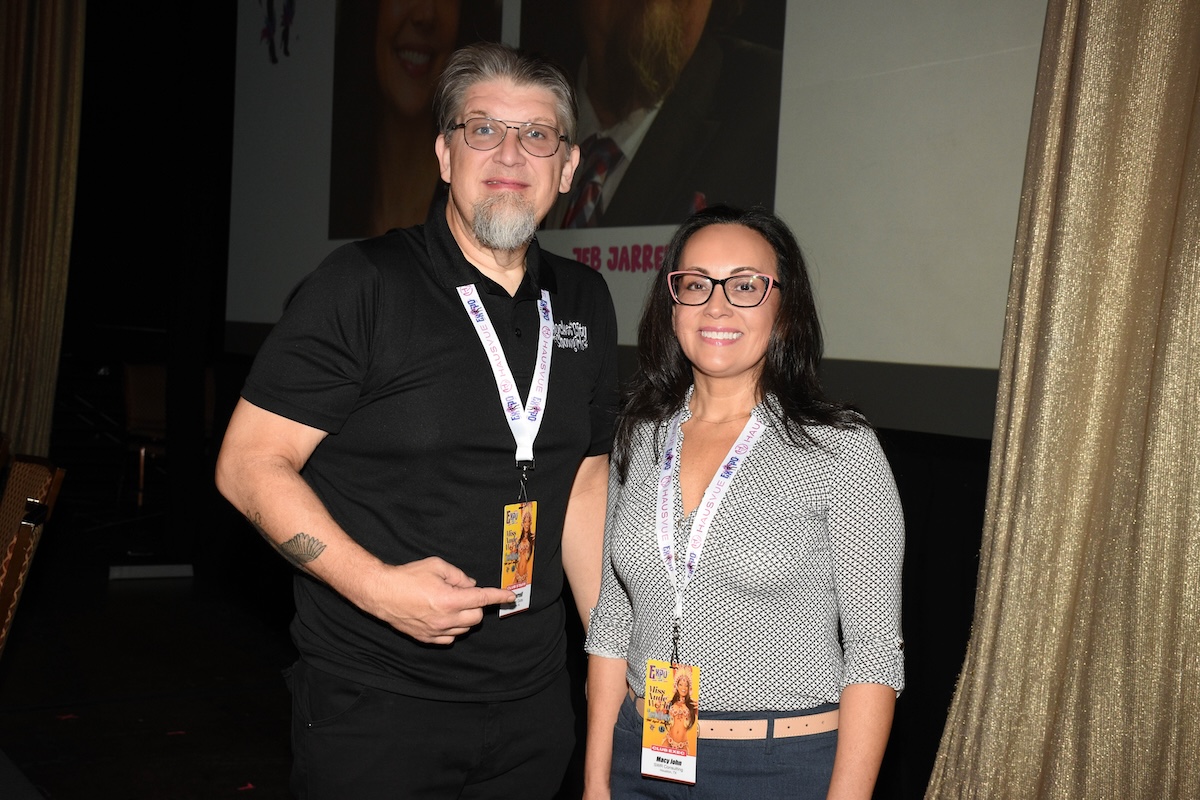

Social media marketing expert Macy John and self-taught master of AI Jeb Jarrell explain how to work around Meta’s latest restrictions and use AI to your advantage in this recap of this year’s Reel to Real seminar.
With Meta’s overly restrictive environment, showing skin — any skin at all — could put your accounts at risk. So how are clubs and entertainers supposed to promote themselves on Instagram or Facebook? And how will AI change the landscape for social media marketing? At the 2026 ED EXPO, RCI Marketing Director Macy John and Jeb Jarrell of the Pony Clubs chain answered these questions and more in their seminar Reel to Real. Led by ED Publisher Dave Manack, the discussion touched on Meta’s Community Standards, fighting account suspensions, the kinds of words, photos and hashtags to avoid, getting started with AI chatbots and improving your club’s chances of appearing in relevant AI search results.
MANACK: Macy, when did you first start to see that club accounts were being shut down?

JOHN: Around December of last year, we saw a wave of mass suspensions. And when I logged in to do an appeal, it wasn’t the normal violation message. Instead, we were suspended for violating the Account Integrity Policy, which deals with banning users who have too many accounts, too many business managers, too many of the same emails attached to different accounts.
MANACK: When you realized they were all getting shut down, what were your next moves?
JOHN: I looked at Meta’s Community Standards to see what was updated. I knew there was already strong policy enforcement using AI, but was anything else updated? The policies I found that would impact us the most, in addition to Account Integrity, were Human Exploitation, which deals with labor trafficking, human trafficking, sexual activity and age restrictions on pages that are considered adult.
So, I put age restrictions on our pages and took a look at the posts that Meta’s AI system had flagged to figure out what policies were affecting our clubs. What I noticed were posts being flagged in violation of Meta’s Sexual Activity policies. Implied nude pictures, see-through outfits or photos where entertainers’ faces are covered make up a lot of what clubs would post. When Meta’s AI system was taking this content down, it couldn’t make the distinction between real human trafficking, exploitation or sexual activity and a legal adult business. So, we had to change some of the wording and some of the posing in the imagery.
MANACK: What did you do to get the suspended accounts brought back?
JOHN: The appeals that we submitted were lost immediately, and there was no real explanation on the appeal process or why the appeal wasn’t accepted. So, we found an attorney out in California who deals with internet law. He said to send them a demand letter, that there’s no need to sue them. Everybody signs an arbitration agreement, and as soon as we create an account, we say, “I want to follow the rules.” Meta has nothing against legal adult entertainment, so he said we should see the accounts come back up, but that was like three months ago. Every week I ask for an update, but they’ve reduced their workforce tremendously, and there are so many people who have gotten their accounts suspended, so it’s a long wait. What used to take two weeks now takes much longer.
MANACK: How many people in this room have had your Instagram account shut down? (Nearly everyone in the room raises their hand.) So, what is the issue with Meta?
JOHN: It’s not that Meta is against adult entertainment. They allow users to add their usernames and subscription links to their adult websites. They just don’t want that content on their site. It’s also about complying with FOSTA and SESTA and the aggressive implementation of the Community Standards. The problem for us is that the content we’re posting often looks a lot like human trafficking.
AI is about language learning models, and they get fed millions of photos and pieces of information that come from various government organizations and non-government organizations. So, just imagine what the content it’s being fed on trafficking and solicitation looks like. It looks a lot like the stuff clubs are posting. For example, you post a photo of a girl who has a bottle posed between her breasts, and your caption says “Lola’s available tonight. Come see her. DM us for more information.” That language and image match what AI is learning about how people are exploited and how people are trafficked. And AI isn’t there to understand context. They’re there to just recognize patterns. Anything that you post that mentions price or shows just body pictures will be a problem.
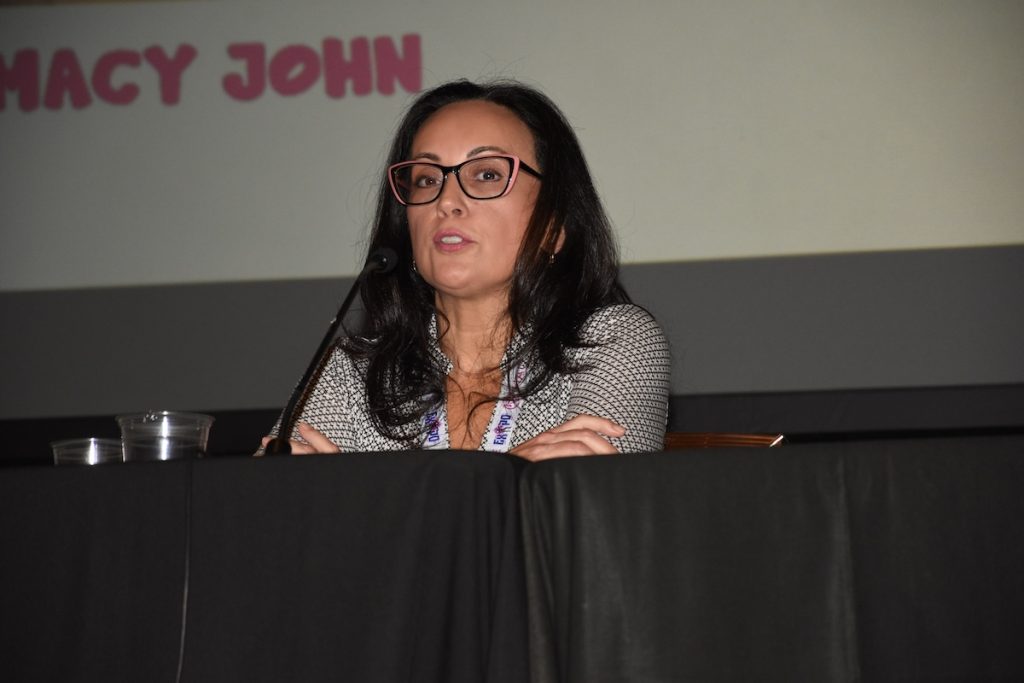
“Just imagine what the content AI is being fed on trafficking and solicitation looks like. It looks a lot like the stuff clubs are posting.”
— Macy John
MANACK: How have you changed and adjusted your strategy with social media promotions?
JOHN: Meta requires adult businesses to mark their pages for 18 and over, and they’ve also gotten stricter with alcohol. You’re allowed to promote alcoholic drinks, but you first have to mark your page as having alcohol content. The reason for this is to make sure the content you post is only reaching adults and people who can legally drink, so we’ve adjusted that and set all of our pages for users 18 and over.
Another change we’ve made is in the posts themselves. We make sure neither the image nor the language used in our captions can be misconstrued as advertising or selling humans. So, the captions use more youthful language about the party, the experience, DJs playing “bangers,” being open late. Instead of posting a photo of just one girl, we post a photo of a group of people. We tell the girls to smile because when the girls have lusty looks on their faces, that gets flagged as solicitation. So, now our posts are more about the party, and that’s reduced a lot of our issues.
MANACK: Jeb, there was a time not long ago when you knew next to nothing about AI. But rather than be intimidated by it, you embraced it. What were the first steps you took to get comfortable with AI and figure out what it is?
JARRELL: I just started playing with it, asking it questions like a toddler does. The nice thing about chatbots like ChatGPT or Claude is you can ask the same question 10 times in a row, and it doesn’t get mad at you. It just keeps answering. The easiest way to start with AI is to pick one of them and just talk to it. Ask it what it can do for you, and it’ll interview you. It’s not going to take all of your personal information in one conversation and all of the other scary things the media likes to tell you. But ask it questions, let it get to know you a little bit, and then ask it what it can do for you, and you’ll be blown away by the answer.
MANACK: How long were you tweaking and working with AI before you actually got the hang of some things?
JARRELL: I had the first thing to play with, a product in my hand, within three days. And then I discovered that ChatGPT can shop on Amazon, and that started a whole other problem. (Crowd laughs.)
MANACK: What are some of the other programs you’ve used that have really expanded your use of AI?
JARRELL: Well, Claude is obviously a great Anthropic product. Claude Code is a nice programming language, and you can use it with Claude. So I don’t know how to code. I don’t know languages. All I know is I can ask a question, and it will walk me through it slowly. So using Claude and Claude Code together, you can actually make some really nice software, and then programs like Replit make entire websites for you, full development, and actually carry you through the process, even though you don’t have any skill base in that particular technology.
MANACK: How did you start to incorporate AI into your personal life?
JARRELL: The very first thing that AI became handy for was that it was a Siri that actually worked. I could ask it to remind me about something, and it would actually remind me. It would remember everything. So before I knew it, it was my to-do list and literally my action points, and it carried me through the day until I got everything done. That really created a lot of ability to get work done quickly.
MANACK: When did you start to bring it into your work life at the Pony Clubs?
JARRELL: The first thing I made was a Google app for the managers who needed to know who had already contacted an entertainer that day, so that we weren’t hitting up the same entertainer three times a day, going, “Hey, you gonna come to work with us today?” So, that was the very first thing I made because that was a problem that we were experiencing at that moment.
MANACK: So, through AI, you created an app, and the app can send messages out to people?
JARRELL: Each individual is still using their own phone to communicate with the entertainer, but the app allows you to make a note in a shared folder so that everyone knows who you’ve talked to.
MANACK: What are some of the things about AI that you wish everyone in the audience would know?
JARRELL: It’s a lot more stable and effective than you think it is. The integration that it’s going to have in our lives over the next two or three years is already here. We’re just trying to catch up. Has anybody in here asked ChatGPT what the best strip club in the city you live in is? And then, did you follow up with “Why am I not on this list?” Those kinds of things can make a giant difference in how you connect with your clientele.
MANACK: If you asked AI “What’s the best strip club in my city?” and your club isn’t listed, what could you do to change that?
JARRELL: When responding to people’s questions, particularly on ChatGPT and products like that, it goes to Reddit and X before it goes to Google, and thankfully this week Google’s now added into the search. But Reddit and X are where ChatGPT searches to find out who’s the best strip club in your city, so if you go to those places and answer questions like, “Hey, I’m going to Miami. Where’s the best place for bachelors?” and answer it not as the business, but as an individual, that’s going to generate more response.
MANACK: What do you think the immediate future looks like for social media marketing for adult nightclubs?
JOHN: I think the internet overall is becoming very restrictive, and it’s not just impacting adult entertainment. There’s a strong focus on showing appropriate content to children. There are a lot of laws that states are passing to take AI chats away from children. There’s also a big push on privacy laws where people can decide what information the bots, the cookies, collect from when they’re doing their searches. So, I think the most important thing for us to do is to own your information, to be in charge of how you are viewed. Your website tells AI programs who you are, and if yours just shows your hours, location and a couple of pictures, then that’s nothing.
Nobody goes on the internet and discovers your club by searching for its name. Most of the time, they find your club by searching industry keywords. And searching has become more conversational. It’s not only people typing in “strip clubs near me.” People are asking, “What’s the best place to go for a bachelor party?” or “What’s the best bar in my city that serves food?” And if you put those questions on your website and you answer them, your club is going to come up in searches, and you’ll be able to take control of your club’s brand, helping it get found.
JARRELL: I think our strategy has to completely change when it comes to how we’re using social media. Everyone in the world knows we have ladies at strip clubs. We don’t have to advertise that we have ladies, and that’s what they get mad at us for. So advertise everything but the ladies. Advertise the experience, the menu. Promote everything that’s not a dance, that’s not buying alcohol, that’s not a dancer. Everyone knows we have strippers. We can stop promoting that.

“Has anybody in here asked ChatGPT what the best strip club in the city you live in is? And then, did you follow up with ‘Why am I not on this list?’”
— Jeb Jarrell
MANACK: Would you suggest that clubs devote a little bit of time to three or four different social platforms, or really concentrate on one platform and do it right?
JARRELL: If you’re just limited, Instagram has your best reach, and then make sure that your Google Business Profile is done correctly. A lot of people do not make sure that their Google Business Profile is complete, which means your searches aren’t working right. And nothing beats Instagram when you’re trying to reach 21-45-year-olds. But you’re stuck inside the Meta universe, so I’d like to add this: No matter which social media platforms you use, please add a platform you own, like an email newsletter or a text group. Something that you own offsite. So if Google or Meta one day decides to screw you, you will still have built something you control yourself offsite. I can’t recommend that enough.
JOHN: As Jeb said, your Google Business Profile is very important, as are your other business listings. Create that funnel where it starts with a search or social media views that lead them to your website, but collect their information on your website. Ask them to sign up for emails, sign up to get a free admission coupon, make a reservation, make a purchase. In the end, you gather that first-party data, and then you use other tools to advertise to them.
Questions from the floor
QUESTION: When we had a feature entertainer at our club, we got flagged for sexual exploitation after she posted a video saying she was going to be there doing performances. How can we still advertise features without getting flagged?
JOHN: I would have her create a talking video saying, “You’re all invited to my party at Mons Venus this week! We’re going to be popping bottles, listening to music.” So you talk about music, you talk about food, you talk about dancing. We’re all going to be dancing. Stay away from the performance, calling them entertainers and anything that has to do with selling VIP rooms. Just say, “Join us for the party” or “You’re invited.”
QUESTION: Is it possible that our hashtags are flagging us as well? Like #PonyNation, #dancer, #spicyballerina.
JOHN: Yes, especially if you use dancer hashtags. Maybe the Pony hashtags too. Once a page gets suspended, any new page you create with that name gets suspended as well, and I would imagine that anything associated with that name would get flagged. So, you just have to change your hashtags to things like #party, #nightlife, #afterhours.
JARRELL: Your business address can also be tagged, and once you’ve been flagged on Meta, it doesn’t matter what the name of the business is. That address is now burned. We all attach our websites to Meta, which you know obviously is not what they want us posting on there. Both those things can kind of keep burning us over and over.
QUESTION: As we create AI images, we’re concerned about the possibility of finding out a few years from now that we’ve violated some kind of exposure or copyright law, like with all of the model lawsuits. Can you comment on that?
JOHN: If you’re altering a professional or stock photo, you need a model release that includes a note that their image can be used to generate new AI images. Entertainers really don’t have a problem with this; they want to be promoted. They don’t mind as long as you make them look good. But your model release, you have to do that through an attorney.
JARRELL: If you’re asking about completely AI-generated images, that’s not a question we can give you a definitive answer on because the world has not decided yet. Every day, new lawsuits are being brought forth, and these decisions are being made. So, the only thing I can tell you with confidence is you’re in the same boat as everybody else. No one’s 100% sure on the copyright yet. The only thing they have said so far, and the courts have upheld, is if I asked it to make it, it came from my imagination, then the product it made was for me, and that’s the only thing they’ve decided so far. So that one’s floating in the wind. Keep watching the news.
For more information, visit theedexpo.com.
(Note: This article appears in the November 2026 issue of ED Magazine.)