















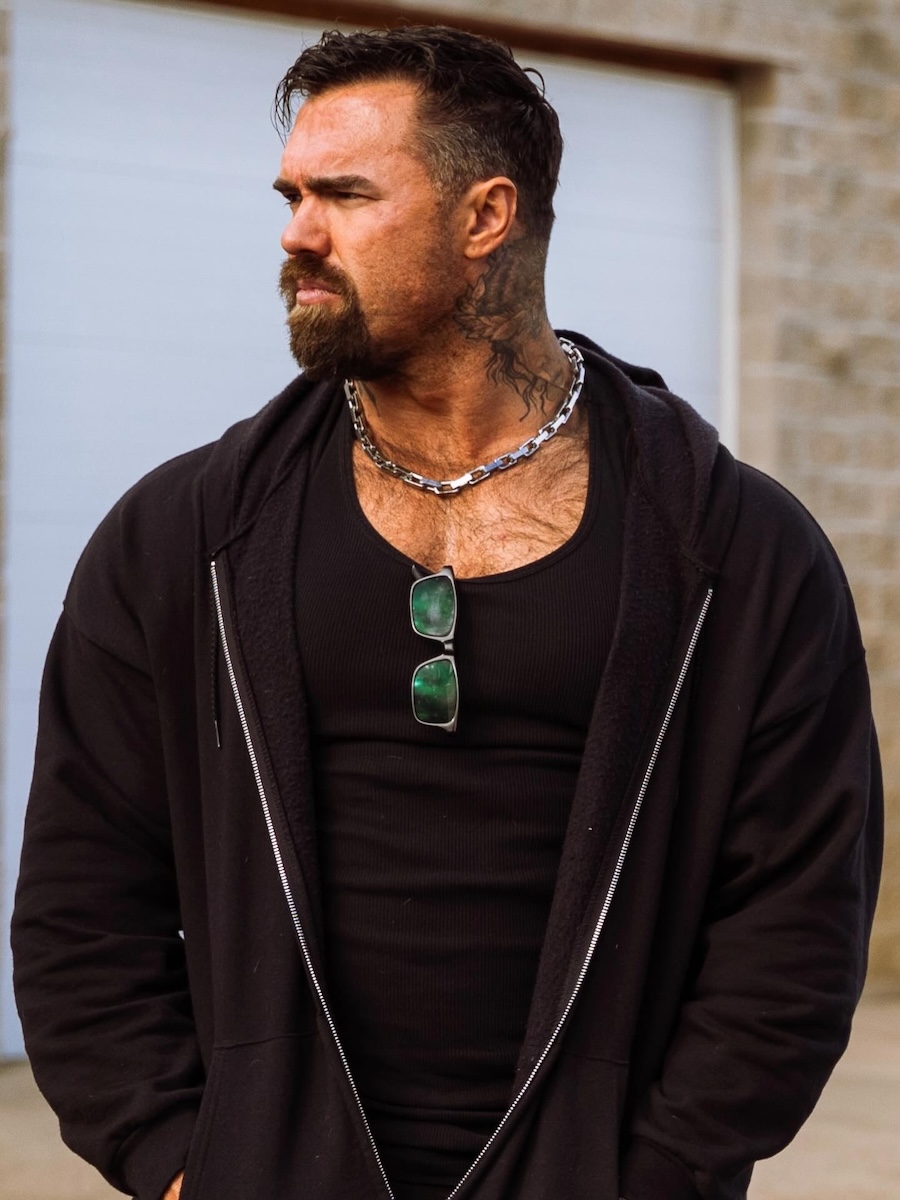

Platinum 84’s Rich Sutherland talks about the role of a modern-day Doorman and the art of balancing authority with approachability.
(Note: This article appears in the July 2026 issue of ED Magazine.)
At first glance, Rich Sutherland looks like the person you would expect to handle security at an adult nightclub. A lifelong wrestler and boxer, a dedicated weightlifter and a 10-time bodybuilding champion, he has the physical presence that naturally commands attention. But according to Sutherland, muscles are only a small part of what makes security effective in today’s nightclub environment.

For the Doorman at Platinum 84 in Denver, professionalism, emotional control and communication have become the most valuable tools of the trade.
“While living in Vegas, I worked in the adult industry, and realized a bit of professionalism goes a long way instead of the short-lived ‘kid in a candy store’ mentality that a lot of people adopt,” Sutherland says.
His journey into nightclub security was not part of a long-term career plan. However, having already experienced life as an entrepreneur, he was ready for a change.
“There’s a great deal of extra work that goes along with running your own business,” he shares. “Being able to clock in, make some money and leave work at work when you clock out was very appealing.”
While many outsiders assume a Doorman’s primary responsibility is keeping unwanted guests out, Sutherland says the reality is much more complex.
“As a Doorman, you’re really there for two reasons,” he explains. “First, to keep everyone safe, but shortly thereafter comes the need for the club to be a fun, comfortable, enjoyable place for both clients and employees.”
“Being direct and always prepared to handle business and maintain boundaries while simultaneously making sure everyone feels safe and has a good time is an art!”
— Rich Sutherland
That means the job often involves much more than monitoring the entrance or responding to conflict. Doormen frequently serve as a bridge between dancers, DJs, management, bartenders and guests, a balancing act that requires someone who offers more than muscle mass.
“Being direct and always prepared to handle business and maintain boundaries while simultaneously making sure everyone feels safe and has a good time is an art!”
The evolution of the security role has also changed the type of personality that succeeds in the position. In the past, physical size may have been viewed as the most important qualification. That’s no longer the case, though. According to Sutherland, the most significant warning signs for hiring managers to look out for are often the applicants who are too eager to prove how tough they are.
“Tough guy attitudes, emotionally unstable or unregulated people are all red flags.”
For this Doorman, the true art of the job is balancing authority with approachability. Security professionals must establish boundaries while still making others feel respected and valued. This philosophy was tested during one late-night interaction involving a group of customers who became upset when security told them they’d need to collect their drinks in order to comply with the club’s liquor license requirements.
“Our alcohol license allows alcohol to be served and consumed on premises until 2 am,” he explains. “As we’re going from table to table, telling them we need to collect their drinks, one table took offense to the way my coworker worded it as a demand, and they stood up ready to fight.”
Rather than escalating things, Sutherland chose to approach the situation calmly. He stepped in, asking the other security employee to walk away, and explained the club’s liquor license while apologizing to the group.
“The clients felt respected and heard,” he continues. “I later found out all five of them were professional boxers, celebrating a knock-out victory from earlier that night. That would not have been a fun night for the security team!”
As clubs continue to evolve, Sutherland believes owners need to rethink how they train and support their security teams. Size alone doesn’t prepare someone to handle today’s challenges. His advice for club operators?
“Pay them well, make sure they feel valued and give them HR-style training on how to de-escalate,” he says. “Give them the tools to succeed!”
For more information, visit platinum84.com.