














ED Legal Correspondent Larry Kaplan interviews Chuck Wilson and Gary Sikorski of Strategic Club Consultants on the evolution of club security and the new front-of-house. Look for Part Two in the September issue where they’ll discuss tackle training, mindset and what separates the pros.
(Note: This article appears in the July 2026 issue of ED Magazine.)
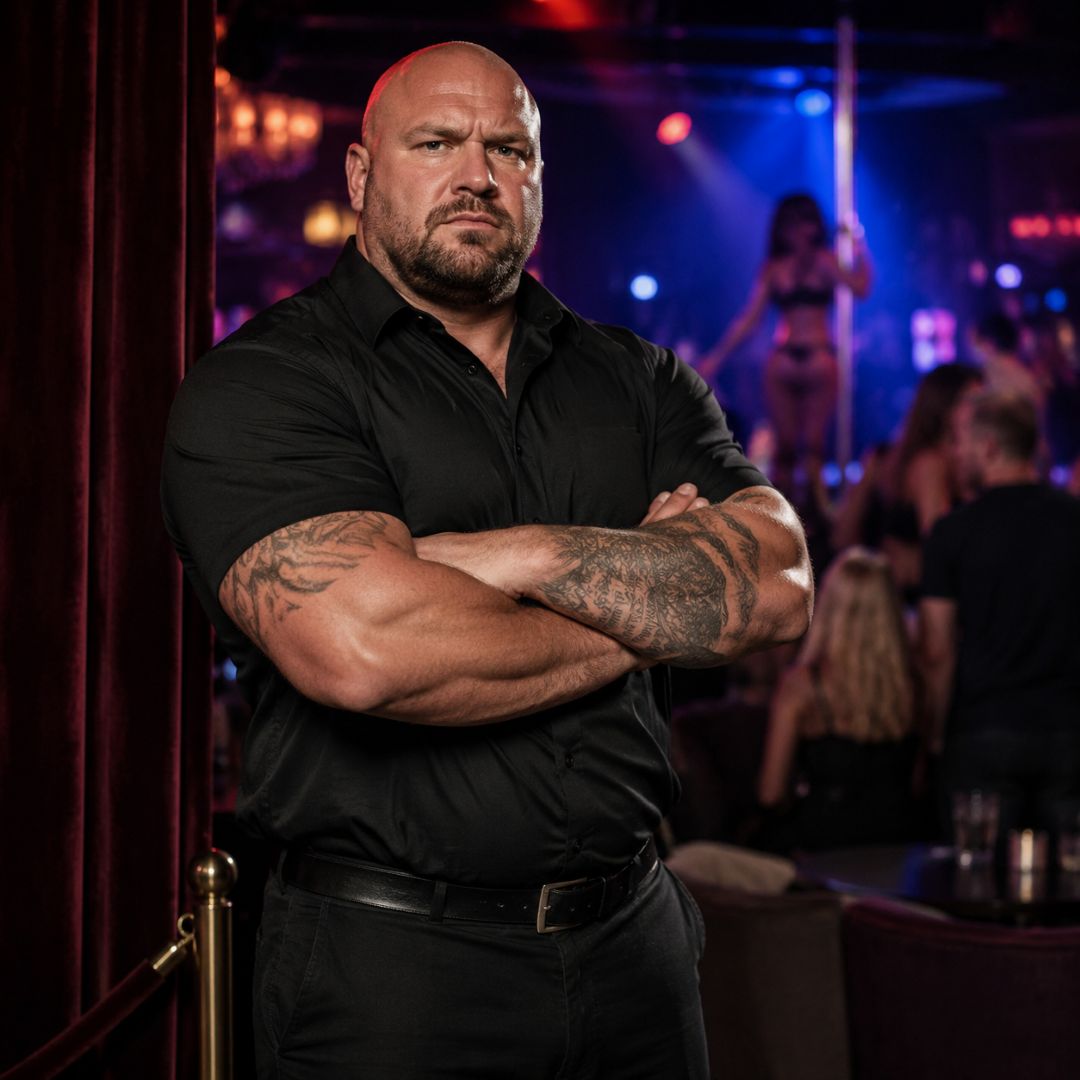
The days of the burly strip club bouncer cracking heads at the front door are long gone. What was once a job built on muscle and intimidation has evolved into a role closer to hospitality: sharp, professional and focused on protecting the guest experience.

Adult entertainment has traveled a long road from its theatrical burlesque and vaudeville roots into a real nightlife business built on customer experience and serious revenue. Go-go dancing took off in the ‘60s, opening the door to topless and eventually bottomless performances, and the modern strip club was born.
Back then, bouncers were hired for one reason: muscle. They worked the door, broke up fights and tossed out troublemakers. Club culture was rougher; drunk guests, aggressive posturing and quick tempers meant toughness mattered more than anything else. Removing problems by force was the expectation, not enhancing anyone’s night.
Then the ‘80s happened. Private dances, VIP rooms, bottle service — the experience got personal. As clubs became more visible and profitable, smart operators responded with tighter structure, sharper branding and an upscale feel. Guests today want the whole package. As clubs leveled up, security had to follow. While some clubs still maintain traditional security staff, many now call the people working the door and floor hosts or something similar. Security remains part of the job, but the role is broader.
In Part One of this two-part series, we dig into how that role has shifted, who clubs should hire and why the hospitality mindset has replaced the muscle mindset. To learn how today’s hosts work and are trained, ED Legal Correspondent Larry Kaplan spoke with Chuck Wilson and Gary Sikorski of Strategic Club Consultants, which trains hosts and other adult nightclub front-end staff for numerous adult clubs and club chains. Wilson and Sikorski are both decorated former police command officers who’ve spent decades training and supervising police and private security professionals.
ED: In the early days of adult clubs, security was hired primarily as muscle — screening guests, breaking up fights, removing troublemakers. How has that role evolved, and what are their core responsibilities now?
WILSON: Back in the day, the playbook was simple: wait for a problem, then use physical force to remove it. Today, we view the use of physical force as a failure of system controls. The modern host is essentially a risk manager wrapped in a hospitality suit. Our responsibilities have shifted toward proactive environmental control, guest screening and behavioral profiling at the door, monitoring crowd dynamics, managing entertainer safety and using advanced communication to neutralize friction before it escalates. We’re there to protect the venue’s liquor license, shield the owner from liability, and ensure a premium guest experience.
SIKORSKI: What many people don’t realize is that the modern host is often the most important employee in the building after the manager on duty. The position now sits at the center of security, hospitality, customer retention and revenue protection.
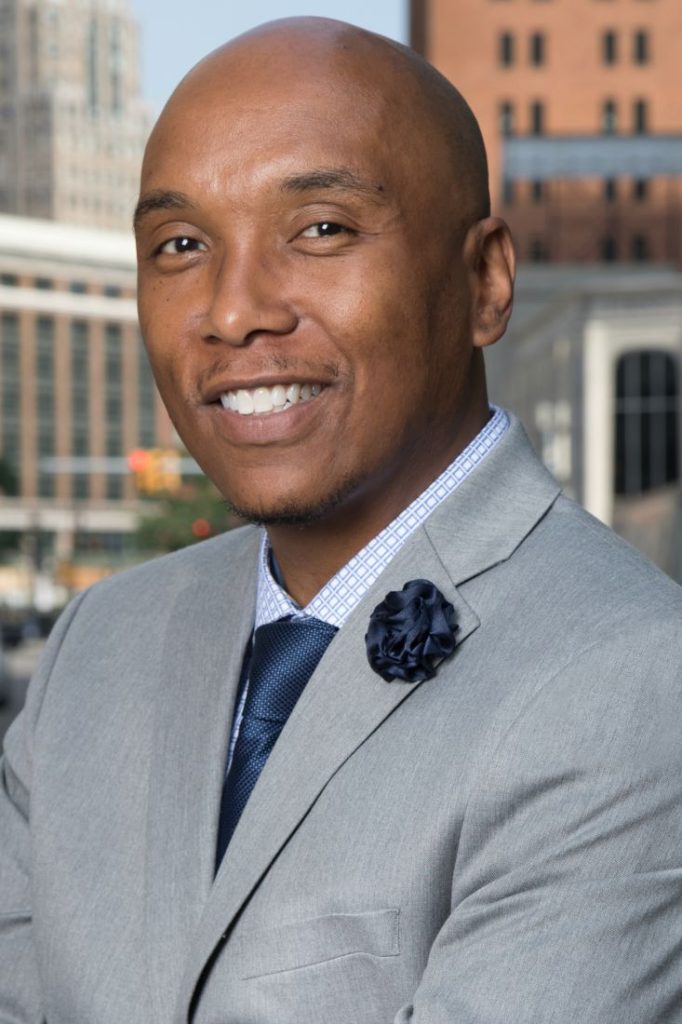
“High emotional intelligence and strong situational awareness matter more than sheer physical size.”
— Chuck Wilson
ED: What’s the single biggest tell that a venue is still operating with a ‘90s bouncer mindset?
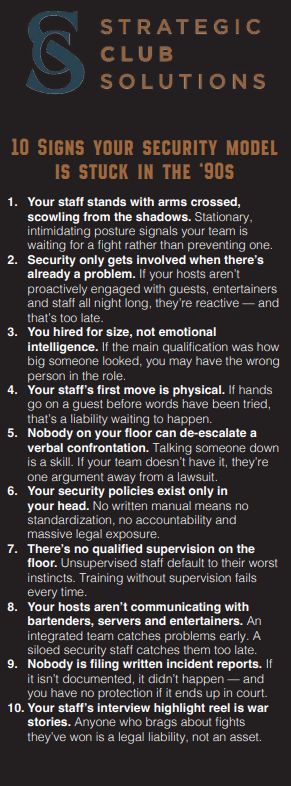
SIKORSKI: Often, a significant tell isn’t the security staff themselves; it’s how the rest of the venue interacts with them. In an old-school bouncer environment, security operates separately and only gets involved when there’s a problem. In a modern venue, hosts are integrated into the operation, approachable and constantly communicating with entertainers, bartenders, servers and management. Success should be measured by how many problems they prevent, not how many people they remove.
ED: How do you balance that hospitality identity with the reality that this person still has to physically intervene when things go sideways?
WILSON: When you build rapport with a guest, you’re banking compliance currency. “Hey man, you’ve been great tonight, but it’s time to head out, let me help you get an Uber” works a hundred times better than putting hands on someone. But if someone crosses the line into aggression, that switch flips instantly. We pivot to an organized, measured and legally defensible physical intervention — minimum force necessary, applied without hesitation.
SIKORSKI: The best hosts understand that hospitality and enforcement are complementary skills. A professional can seamlessly transition between those roles while maintaining control, professionalism, and legal defensibility throughout the encounter.
ED: How has the smartphone era changed training?
WILSON: I tell my guys every day: assume you are on a live broadcast. We train hard against squaring up, chest-bumping or shouting matches. We ban profanity and mocking language. And critically, never touch, block or try to snatch a guest’s phone. Let the camera record you handling the situation like a disciplined professional.
SIKORSKI: The modern standard is simple: act every day as if your interaction will be reviewed by ownership, attorneys, regulators and the public. If your conduct can withstand that scrutiny, you’re probably handling the situation correctly.
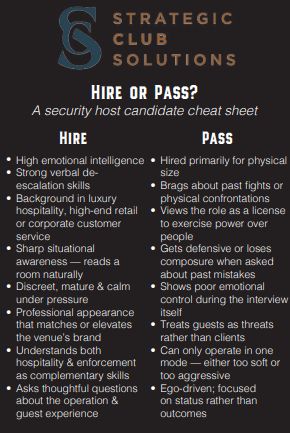
ED: What are you looking for when hiring hosts today?
WILSON: High emotional intelligence and strong situational awareness matter more than sheer physical size. Give me someone who’s worked in high-volume luxury hospitality, high-end retail or corporate customer service. The premium skill set today is verbal intelligence, the ability to talk down an angry person while simultaneously scanning the room for other threats.
SIKORSKI: Exactly. Strong observation, de-escalation ability, discretion and the maturity to prevent problems before they become incidents. The best host keeps the room safe without becoming the center of attention.
ED: What red flags should make an operator walk away from a candidate?
SIKORSKI: I’d be cautious of candidates who get defensive when asked about mistakes or show poor emotional control in the interview itself. In this role, ego is a liability.
ED: How important is appearance and presentation?
WILSON: Appearance dictates how the room perceives your authority. Oversized black t-shirts and combat boots signal the venue expects trouble. A professional host’s attire matches or elevates the venue’s standard: well-fitted blazers, tailored suits, immaculate grooming. It commands respect and changes guest behavior without saying a word.
ED: How have litigation risks reshaped what hosts can and can’t do?
WILSON: Everything must be standardized, justified and documented. No chokeholds, no pain-compliance holds. Every physical interaction must be strictly defensive, and every incident must be documented in a detailed written report supported by HD surveillance video.

“The biggest improvement comes when operators stop treating security as a separate function and start integrating hosts into the overall guest experience and risk-management strategy.”
— Gary Sikorski
SIKORSKI: The old-school approach of using unnecessary force is simply no longer acceptable. A good host knows the job isn’t just to remove risk in the moment — it’s to protect the business from liability afterward.
ED: What’s the host’s responsibility around human trafficking?
WILSON: We are on the absolute front lines. Through COAST, hosts and other club staff participate in annual sex trafficking awareness workshops. They learn to recognize potential victims and report through proper law enforcement channels. We foster a culture where staff report even when they’re not entirely certain. It’s about saving lives.
SIKORSKI: Clubs need to create a culture where employees feel supported in speaking up. In many cases, early reporting may be the only chance someone has to get help, so awareness and action both matter.
ED: For an operator who knows their security model is stuck in the past, what’s the first move Monday morning?
WILSON: Audit your operation. Do you have a comprehensive security policy and procedures manual? If your guidelines live entirely in your head, you are exposed to massive liability. Is there active, qualified supervision on the floor? Training without supervision fails every single time.
SIKORSKI: Walk your venue with fresh eyes and identify where problems are actually starting — at the door, on the floor, in VIP or in the handoff between staff. The biggest improvement comes when operators stop treating security as a separate function and start integrating hosts into the overall guest experience and risk-management strategy.
Principal of Strategic Club Consultants, Charles Wilson is a decorated former Detroit Police command officer with 30 years of law enforcement and chief-of-staff experience. He developed Detroit’s current community policing system and now leads a diverse security team of over 400 professionals across casinos, hotels, sports arenas and the corporate world. For more information, email chuck@sccconsults.com.
Gary Sikorski is a decorated law enforcement professional and trainer with over 30 years of experience. Currently, he is the Director of Training at Strategic Club Consultants where he conducts monthly online training seminars for adult nightclub security personnel. For more information, email gary@sccconsults.com.
Larry Kaplan is a business broker specializing in the sale and purchase of adult nightclubs and adult retail stores, a principal in the Strategic Club Consultants training entity and the Executive Director of the ACE of Michigan adult nightclub state trade association. For 25 years, he has served as legal correspondent for ED Publications. For more information, call 313-815-3311 or email larry@kaplanclubsales.com.