




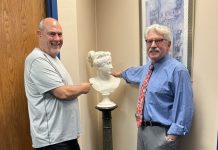












Exotic Dancer Hall of Fame inductee Ken DeGori reflects on the mentors, concepts and creative risks that helped define his career.
There are people who enter an industry after its rules have already been written, and there are people who were there while the rules were still being figured out. Ken DeGori belongs firmly in the latter category.
Over the course of a career spanning nearly 40 years, DeGori has watched the adult nightclub business transform dramatically. He remembers a New York nightlife scene before the modern gentlemen’s club had fully taken shape, when the distinction between a high-end adult venue and the stereotypical strip club was far less defined.

That perspective has given DeGori something few operators today possess: a firsthand understanding of how much the business has changed, and what it took to change it.
“I started out in New York before gentlemen’s clubs,” DeGori recalls. “They were still doing strip clubs in New York, and mostly of the seedy variety.”
By the early ‘90s, however, a very different kind of adult nightlife experience was emerging in Manhattan. One of the clearest examples was Stringfellows Presents Pure Platinum. Through his work with Peter Stringfellow, Michael J. Peter and his brother Dennis, DeGori had a front-row seat as operators began replacing the old strip-club stereotype with something considerably more polished.
“It was a true high-end gentlemen’s club,” DeGori explains. “The girls were just amazing. This is during the days of full-length gowns and hair checks and nail checks and makeup checks and gown checks. It was like doing Miss Universe every night.”
The emerging gentlemen’s club was selling more than nudity and tabletop dances. It was selling polish, glamour and exclusivity. Even before a customer ordered a drink or an entertainer took the stage, the environment was sending a message about what kind of establishment they had entered.
In an industry that has since gone through countless cycles of reinvention, those early standards offer an interesting reminder: Changing customer perception often begins with details.
From one legendary club to another
After Stringfellows, DeGori became involved with reinventing El Morocco, once one of Manhattan’s legendary nightspots associated with the glamorous celebrity nightlife of earlier decades, when movie stars, socialites and other prominent figures filled its rooms. For an adult nightclub operator, stepping into a venue with that kind of history introduced new challenges. The building already carried an identity, a reputation and decades of associations. Transforming it meant taking something rooted in one era of New York nightlife and giving it a new life in another.
Ultimately, the club’s rebranding as Thee Dollhouse represented the broader transition taking place within the industry at the time. The idea of a gentlemen’s club was becoming increasingly sophisticated. Clubs were developing distinct identities, targeting higher-spending customers and becoming more conscious of presentation. Adult entertainment venues were beginning to compete not simply against one another, but within a larger nightlife market.
Looking back at DeGori’s stories from the period, one detail stands out: standards weren’t treated as something happening behind the scenes. They were part of what customers were buying. The gown checks, grooming standards and attention to presentation may sound almost theatrical by modern standards, but they served a practical business purpose. They reinforced the identity of the club.
For today’s operators, that lesson may be even more relevant than the specific rules of that era. A club doesn’t necessarily need formal gowns or nightly inspections to establish standards. But it does need to decide what its identity is, and then make sure every part of the operation reinforces it.
This is during the days of full-length gowns and hair checks and nail checks and makeup checks and gown checks. It was like doing Miss Universe every night.
— Ken DeGori
Learning ‘aggressive hospitality’
DeGori’s memories from early in his career suggest that club operators understood the concept of the “guest experience” long before it became a hospitality-industry buzzword. One particular concept he recalls learning about from his brother helped him establish the foundation for his approach to club operations. The concept? “Aggressive hospitality.”
Despite the name, he explains that it’s not to be taken literally.
“Aggressive hospitality isn’t chasing after a guest and hitting them with a bat,” he laughs. “It means that you’re able to anticipate what a guest wants before the guest knows they want it.”
The idea eventually became important enough to DeGori that when he created his own management company, he named it Agoma — short for Aggressive Hospitality Management. For him, the principle goes beyond simply providing attentive service. It means creating a culture where employees are always paying attention to guests and staying one step ahead. Instead of waiting for someone to ask for something, the goal is to recognize and fulfill the need before the request is ever made.
“Dennis was preaching that long before the John Taffers of the world started talking about hospitality,” DeGori says. “He was the first person I heard all that from. Dennis ingrained that in me.”
A theatrical education
Before he got into the adult nightclub industry, DeGori studied at the American Academy of Dramatic Arts in Manhattan, an experience he credits with teaching him to think differently about what entertainment actually means. That creative mindset ultimately influenced the way he approached club operations.
“I can teach anyone to make a drink. That’s easy,” he says. “But it’s the show that goes along with that drink that really makes the difference. It’s not about the drink. It’s about how the drink is presented.”
The distinction sounds simple, but it speaks to a larger philosophy DeGori has carried throughout his career: Guests aren’t paying for just the product in front of them. They’re paying for the experience surrounding it as well.
His theatrical background encouraged him to think about nightlife the same way a production might be approached, considering presentation, atmosphere, timing, staging and the emotional response of the audience. That mindset would become particularly significant years later when DeGori helped develop the entertainment philosophy behind E11EVEN Miami, which utilizes an entire theatrics department separate from its traditional operations.
The department roster includes a variety of performers, from Cirque du Soleil-style acts to costumed go-go dancers as well as technicians responsible for overseeing lighting and sound, which are treated as part of the performance rather than simply background elements. One of the most important aspects of these performances is that guests aren’t necessarily told when they’re coming.
“The shows aren’t announced,” DeGori says. “They just happen.”
That element of surprise is deliberate. Instead of stopping the room to introduce an act, the entertainment becomes part of the atmosphere itself. A guest might suddenly encounter a performance in the middle of the evening without the music, momentum or energy of the room being interrupted.
For DeGori, that approach demonstrates something adult clubs should increasingly consider as they compete for consumers’ attention against far more entertainment options than they did decades ago. Beautiful entertainers remain essential to the business, but relying on that alone is no longer enough.
“We talk a lot throughout the years about it being a show or about it being an experience,” he says. “But, by and large, I think a lot of clubs think that if they throw hot girls on a stage who take their clothes off and can do some pole tricks once in a while, that that’s enough.”
Today, customers have immediate access to adult content through platforms like OnlyFans, along with virtual reality and countless other forms of digital entertainment. That makes the nightclub experience even more dependent on offering something customers cannot easily recreate at home.
“The guest experience has to be something more than just that,” DeGori says. “It has to be theatrical. I think it has to be musical. It has to be lights. It has to be sound.”
Aggressive hospitality isn’t chasing after a guest and hitting them with a bat. It means that you’re able to anticipate what a guest wants before the guest knows they want it.
— Ken DeGori
Hall of Fame induction
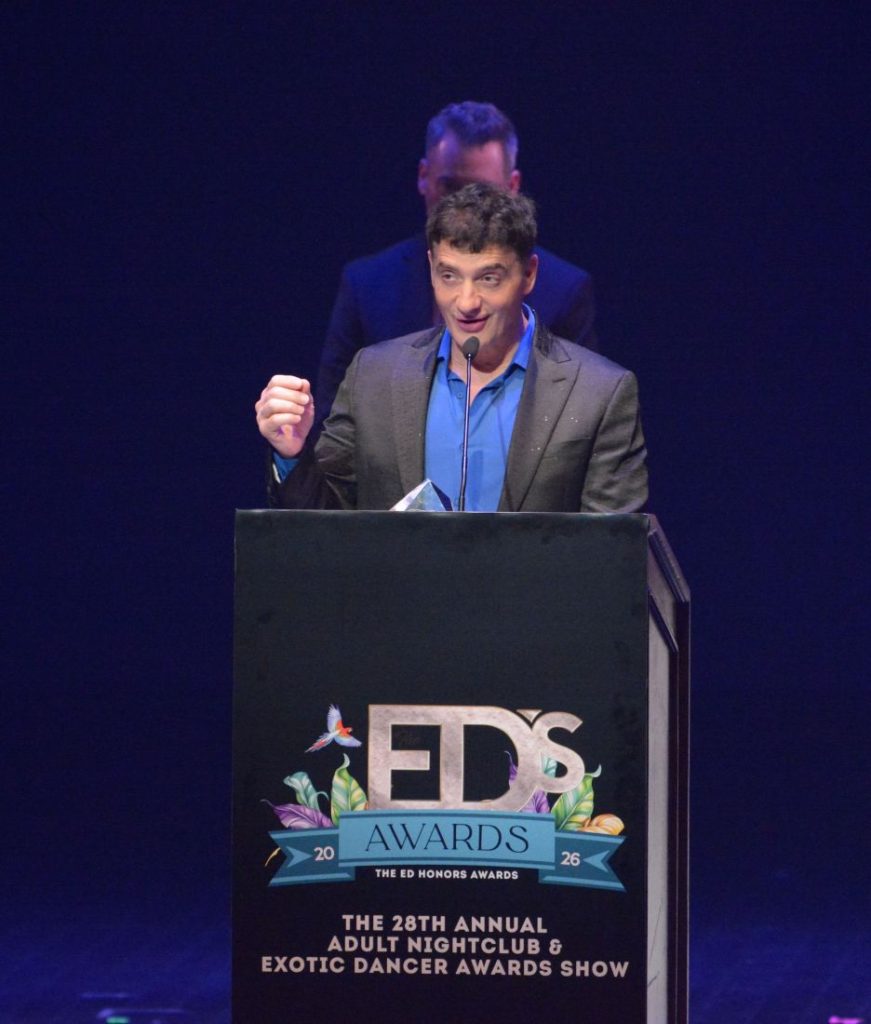
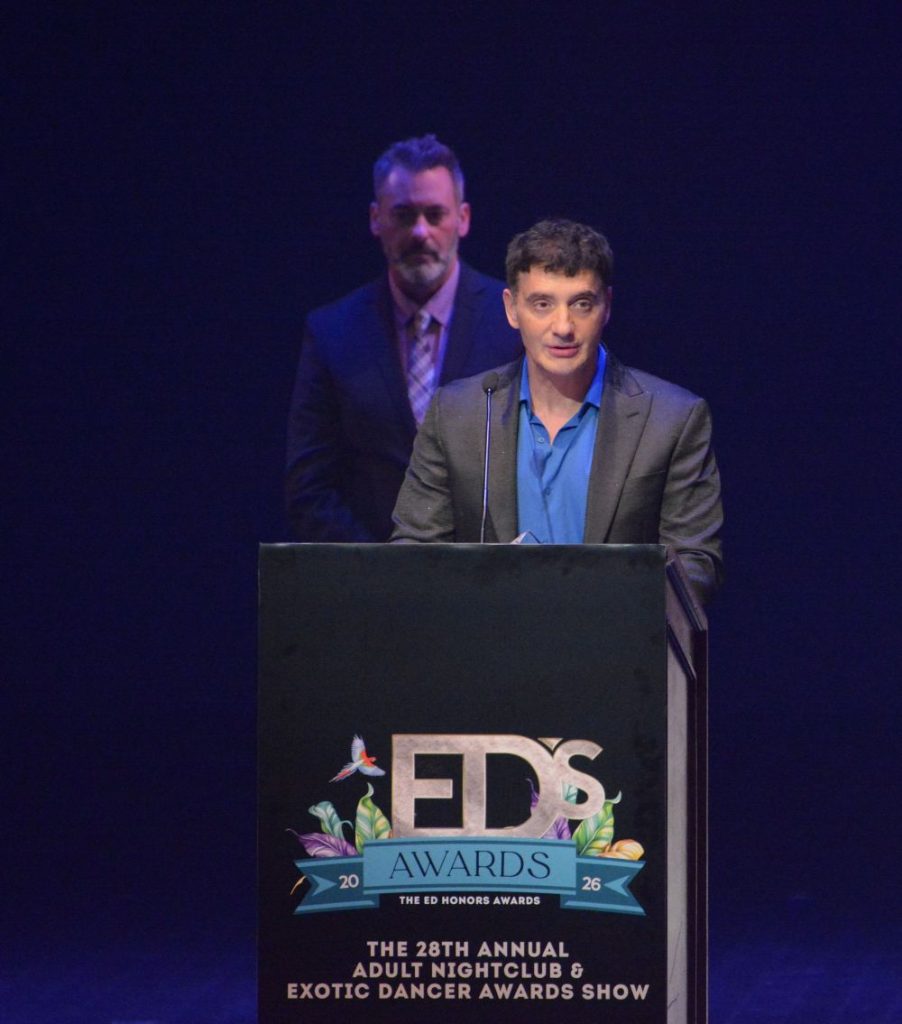
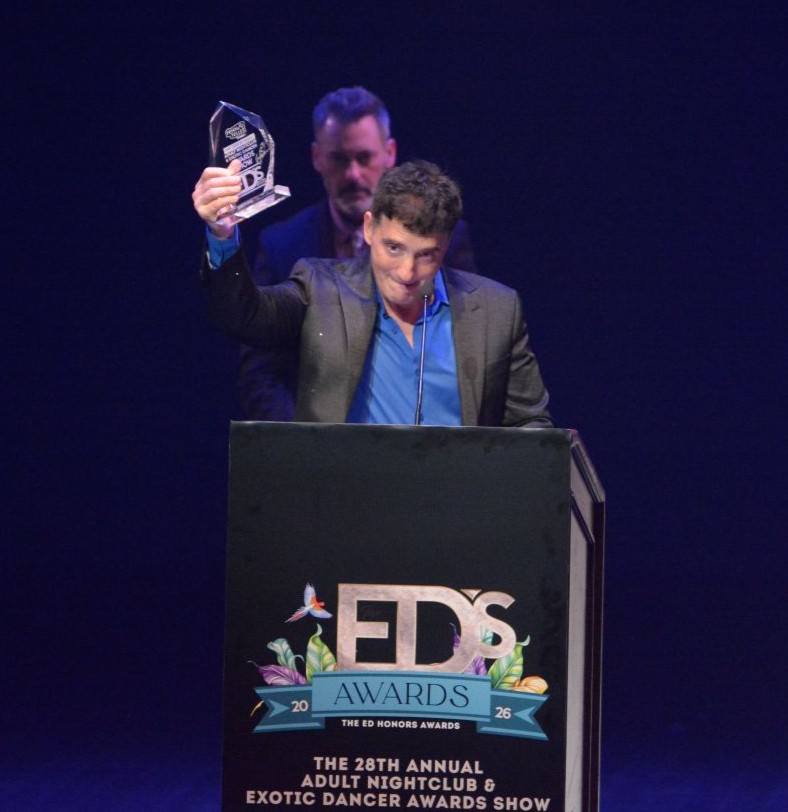
DeGori’s impact can be seen not only in the clubs he has helped operate, but also in the standards, ideas and philosophies he has carried throughout the industry. The following speech was delivered by ED’s publisher Dave Manack as DeGori was inducted into the Exotic Dancer Hall of Fame at the 2026 ED Awards:
“Tonight, we honor a man whose influence on our industry is almost impossible to measure, partly because he would probably prefer that we didn’t try.
For nearly four decades, Ken DeGori has been one of the most respected and accomplished operators in our business. He has helped shape clubs and markets from New York to Chicago to San Francisco, and ultimately helped create one of the most groundbreaking concepts in nightlife with E11EVEN Miami. Yet if you ask Ken about his accomplishments, you’re likely to get a shrug, a laugh or a story about someone else.
That humility is part of what makes him so deserving of this honor.
Ken learned early that a great club is about far more than what happens on a stage. From his brother Dennis, whom he describes simply as his ‘lifetime mentor,’ Ken learned the meaning of hospitality and the importance of culture. He embraced Dennis’ philosophy of ‘aggressive hospitality’ — the idea that true service means anticipating what a guest wants before they even know they want it.
He brought that philosophy together with another influence: theater. Ken studied at the American Academy of Dramatic Arts in Manhattan and understood something that many operators overlooked. A drink is just a drink. A stage is just a stage. But the way you present them can turn a typical night out into an indelible experience.
That philosophy became central to E11EVEN, where Ken helped put theatrics, music, lighting, sound and surprise at the heart of the guest experience. His approach challenged an industry that too often assumed having beautiful entertainers was enough. For Ken, the question was always: What else can you give the guest? What makes your club different? What makes someone want to spend their money with you instead of the guy down the street?
And Ken has never been afraid to challenge the status quo. He looks outside our industry for inspiration, studies what is happening in other markets and countries, and constantly asks what comes next. Sometimes his innovations are enormous. Sometimes they are deceptively simple, like eliminating DJ announcements so the music and energy of the room never have to stop.
But perhaps the best measure of Ken DeGori is not what he built. It is what he has given back.
His commitment to charitable work, including his support of the Make-A-Wish mission, reflects the same philosophy he brings to hospitality: Pay attention. Anticipate what people need. Make a difference.
Today, Ken oversees 17 clubs for Joe Caruba’s BSC Hospitality as Executive Vice President of Operations. Yet when asked to explain nearly 40 years of success, he admits he isn’t very good at it. He says he simply walks into a room and sees things other people don’t.
Maybe that’s the secret.
Some people spend their careers looking for opportunities. Others just have the ability to see them when they walk through the door.
For nearly 40 years, Ken DeGori has been doing exactly that.
And tonight, we are proud to recognize what he may be reluctant to acknowledge himself: a remarkable career, a profound influence and an enduring legacy.
Please join me in welcoming the newest member of the Exotic Dancer Hall of Fame, Ken DeGori.”
For more information, visit www.11miami.com. Note: This article appears in the November 2026 issue of ED Magazine.