













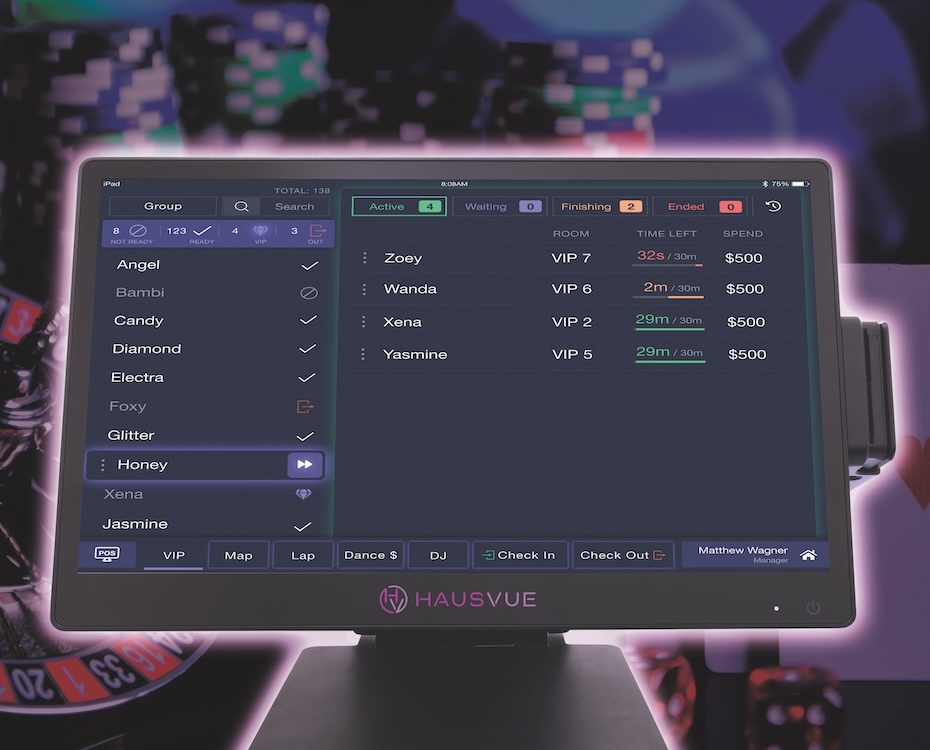

HausVue, Supercharged by SmartTab. CXO Caressa discusses the growing push toward custom POS software, the promise of AI, and why the best technology adapts to the club, not the other way around.
(Note: This article appears in the September 2026 issue of ED magazine.)
For years, the adult nightclub industry has learned to make technology work, even when it wasn’t designed for the way clubs actually operate. Managers have patched together spreadsheets. DJs have developed their own workflows. VIP hosts have memorized processes that exist nowhere except in institutional knowledge. Entertainers have navigated payout systems that often rely as much on habit as they do on software. It works until it doesn’t.

As technology becomes increasingly central to everything from compliance and reporting to VIP management and guest service, a growing number of operators are asking a new question: Would we be better off building our own software?
It’s a reasonable question. But according to Caressa, Chief Experience Officer at HausVue, it also reveals something much larger than technology.
“It tells me operators are trying to solve real business challenges,” she says. “They’re not necessarily trying to become software companies. They’re trying to remove years of operational friction they’ve simply learned to live with.”
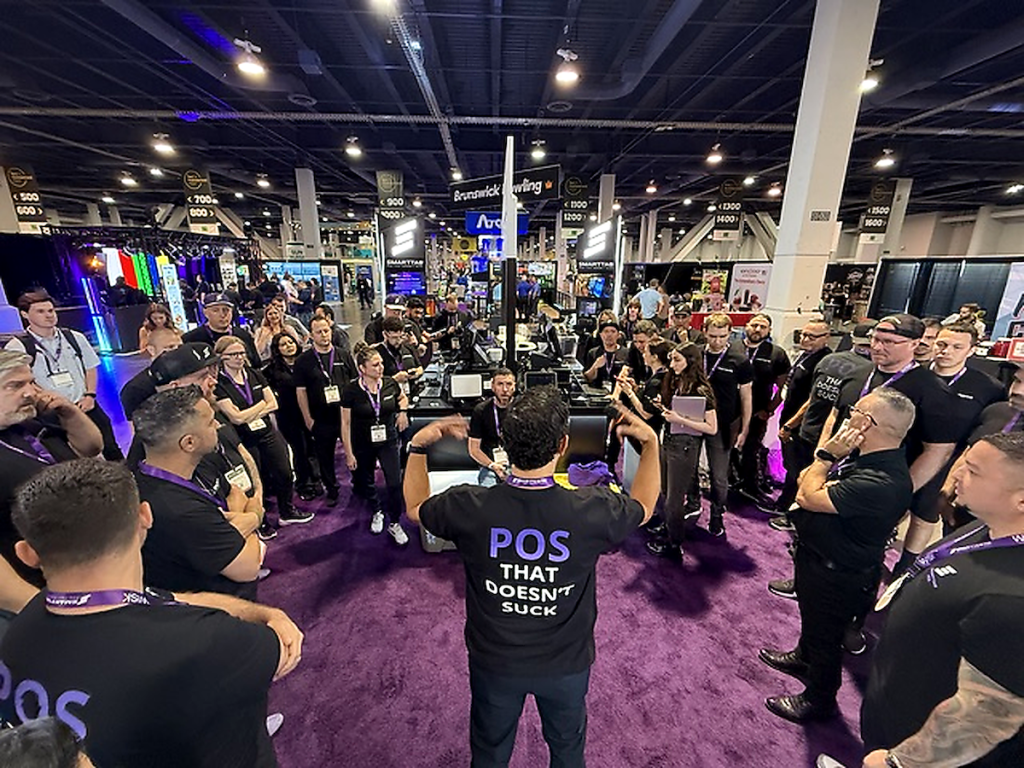
HausVue grew out of SmartTab, a hospitality platform that has long served bars, restaurants and nightlife venues. As the company expanded into adult entertainment, one thing quickly became clear: This industry isn’t simply another version of hospitality.
Adult nightclubs operate under a unique combination of compliance requirements, entertainer management, VIP experiences, revenue structures and guest expectations that simply don’t exist anywhere else. Rather than forcing clubs into a traditional point-of-sale system, the company built an entirely new platform designed specifically around the realities of the business.
Technology that learns the business
Ask 10 successful operators how they run their clubs, and you’ll probably hear 10 different answers. Some emphasize VIP service. Others prioritize stage operations. Payout models differ. Pricing structures vary. Even clubs with nearly identical layouts can function differently.
For Caressa, that’s exactly why flexibility matters.
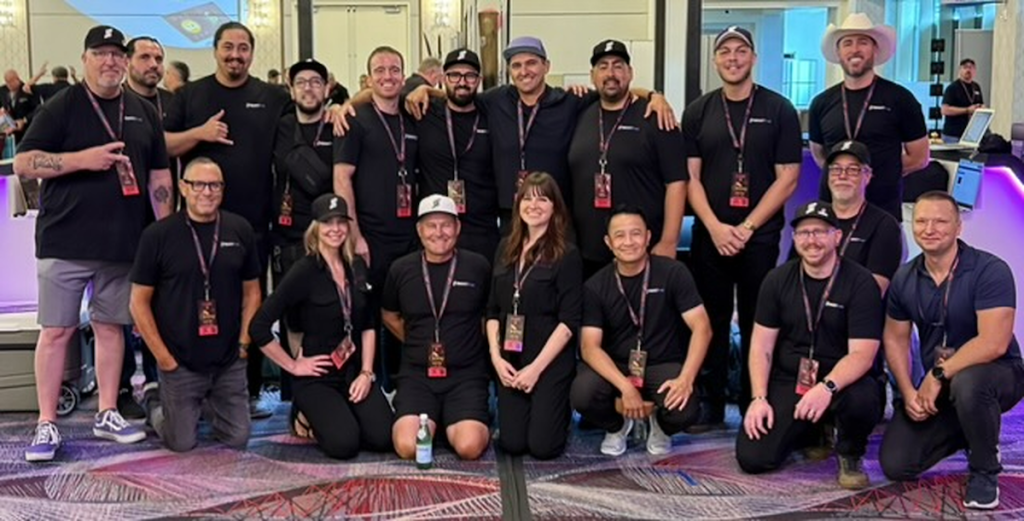
“No two venues operate exactly the same way,” she says. “When you’ve spent years refining a successful operation, it’s natural to want technology that supports your business instead of forcing your business to adapt to the software.”
That mindset has become increasingly important as more operators explore custom-built solutions. The desire isn’t necessarily about creating something flashy or proprietary. More often, it’s born from frustration.
Outdated software creates workarounds. Workarounds eventually become standard operating procedures. After enough years, people begin assuming those extra steps are simply part of running a club.
They’re not.
“They’re limitations of the technology,” Caressa explains. “And those limitations quietly affect efficiency and profitability.”
“We don’t build software for clubs. We build software with clubs.”
— Daniel Baron, HausVue CEO
Rather than asking operators to compromise, HausVue focuses on creating configurable tools that accommodate different operating styles while continuing to evolve alongside the businesses using them. That philosophy extends beyond software development itself.
One quote from HausVue CEO Daniel Baron has become something of a guiding principle inside the company: “We don’t build software for clubs. We build software with clubs.”
The idea reflects the company’s broader approach. Rather than assuming it knows what’s best, HausVue builds its platform around the realities operators face every day.
There is no finish line
Software companies often talk about product launches. Caressa talks about continuous evolution. Ask when HausVue considers its platform “finished,” and her answer comes immediately.
“Honestly,” she says with a chuckle, “never.”
That isn’t marketing language. It’s how she believes software should work.
Building the product is only one piece of the puzzle. Maintaining it requires infrastructure, security, customer support, ongoing development, payment integrations, hardware compatibility, compliance updates and continuous reinvestment.
“If you treat development as something that’s finished,” she continues, “your clients will eventually look elsewhere.”
That philosophy also shapes how the company handles feature requests. Rather than racing to add every suggestion that reaches the support desk, HausVue spends considerable time understanding why someone wants a new tool in the first place.
Sometimes the requested feature is exactly what’s needed. Other times, the underlying challenge points toward a better solution. Some of the company’s strongest ideas have come directly from club owners, managers, bartenders, DJs and entertainers who use the platform every day.
“Operators are experts at running clubs,” Caressa says. “Our job is translating those operational challenges into thoughtful solutions that strengthen the platform for everyone.”
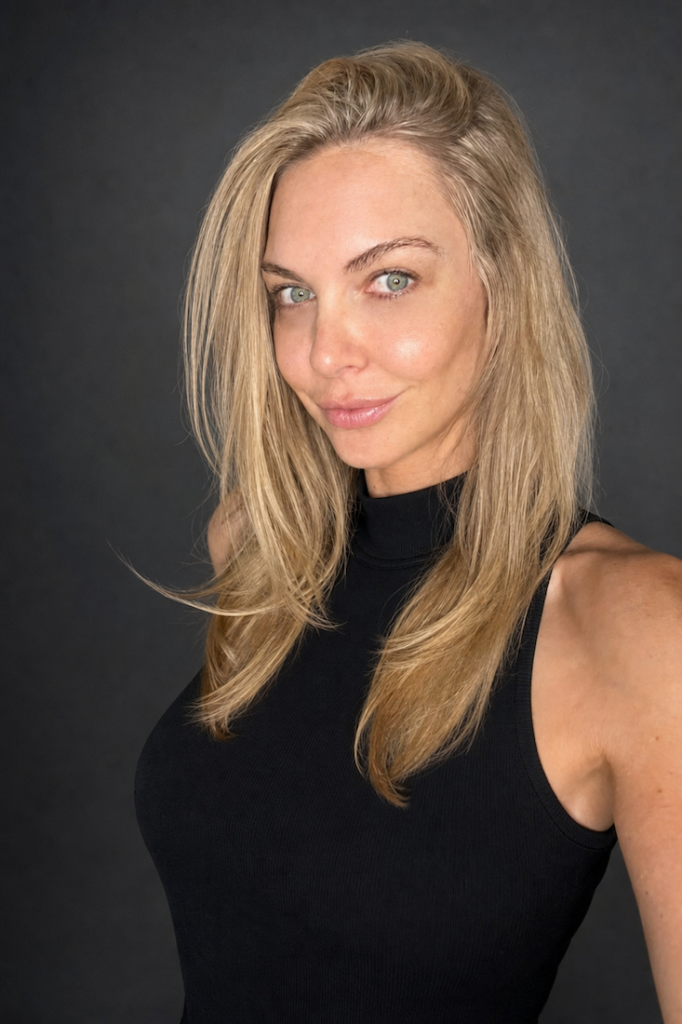
“It may look like software but its the culmination of an entire ecosystem of people and resources. From concept and development to implemenation support and security, every screen is dedicated to helping operators succeed. ”
— Caressa, HausVue CXO
She says the objective isn’t to clutter the software with more buttons, tabs and menus. It’s to remove friction, simplify daily operations and create measurable value.
“We don’t wake up every day trying to build better software,” she says. “We wake up every day focused on helping our clients build better businesses.”
The AI question
Artificial intelligence has quickly become one of the technology world’s biggest buzzwords. For the rest of us, it’s something we pretend to understand, even though most of us have yet to venture beyond the familiar boundaries of ChatGPT and explore its full capabilities. Depending on whom you ask, it’s either the future of business or the beginning of widespread job displacement.
Caressa sees it differently.
She believes AI is one of the most valuable productivity tools to emerge in years, but only when it’s used with purpose. It can accelerate software development, improve testing, assist documentation and help solve problems faster. But it isn’t magic.
“Technology should make people more effective,” she says, “not make people less important.”
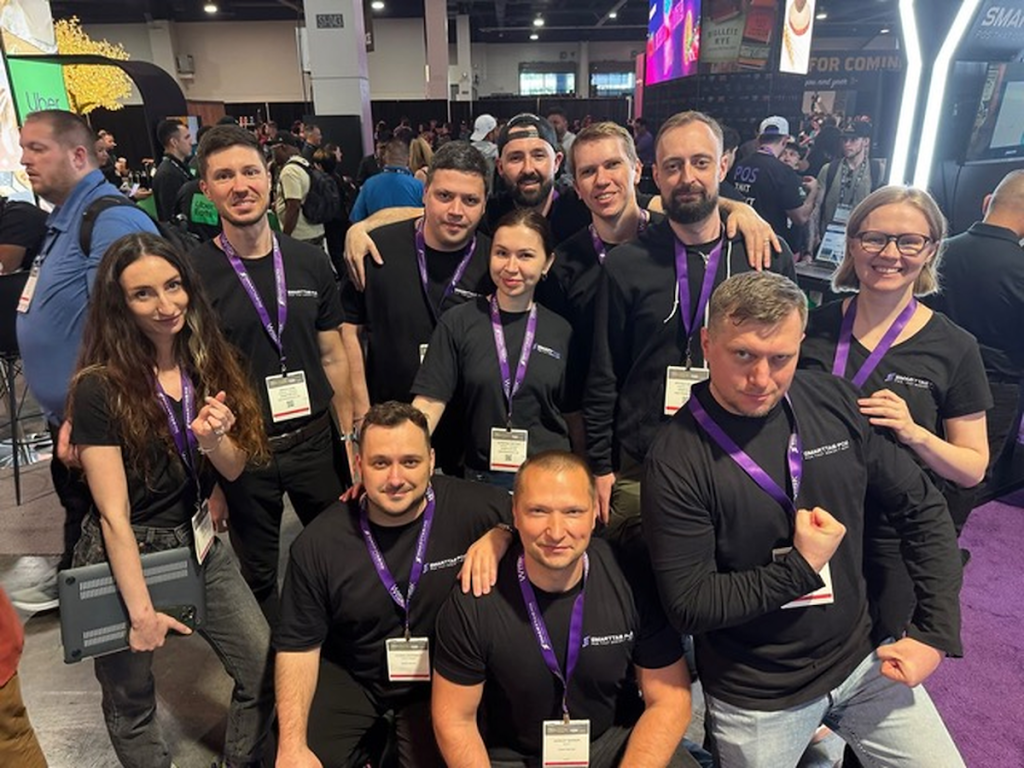
Someone still has to understand the industry. Someone still has to prioritize development, support clients, manage integrations, monitor security, maintain hardware and determine whether changes actually improve the business.
Those responsibilities require judgment, real-world experience and, perhaps most importantly, strong relationships. For HausVue, AI is another tool that supports those relationships rather than replacing them.
Beyond the installation
For many software companies, implementation marks the finish line. For HausVue, it’s the beginning of the relationship. Caressa says she wants operators to feel they’ve gained a partner rather than simply another software vendor.
“We want clients to know they’re being heard,” she says. “Their feedback matters, and we’re genuinely invested in their long-term success.”
That philosophy extends to the company’s business model. HausVue doesn’t require long-term contracts because it believes partnerships should continue through demonstrated value, not contractual obligation.
“We believe partnerships should be earned through value,” Caressa says, “not enforced through contracts.”
The team continues developing enhancements, refining workflows and responding to customer feedback long after installation. As operators evolve, technology should evolve alongside them. Clubs aren’t static businesses. Guest expectations change. New revenue opportunities emerge. Compliance requirements shift. The technology supporting those businesses must keep pace.
That brings the conversation back to the question more operators are asking: Should clubs build their own software?
Caressa doesn’t offer a universal answer.
“If building software becomes a true strategic advantage and you’re prepared to invest in it for years to come, it can absolutely make sense,” she says.
But she also recognizes that most operators didn’t enter the industry hoping to become software developers. They entered it to build exceptional venues, create memorable guest experiences and operate successful businesses in an increasingly competitive marketplace. That’s where she believes the right technology partner delivers the greatest value.
While operators focus on their guests, entertainers, employees and growth, HausVue focuses on building, securing, supporting and continually improving the technology behind the scenes. Because at the end of the day, software isn’t the destination. It’s the infrastructure that allows everything else to succeed.
And for HausVue, every conversation begins with a simple premise: no two clubs operate the same way.
“Whether the goal is increasing revenue, streamlining operations or exploring new possibilities, our platform is designed to configure around each client’s needs, not force their club to configure around it.”
For more information, visit hausvuepos.com or scan the QR code below.