











America at 250: Freedom, independence, and the legally operating adult club industry
by Angelina Spencer-Crisp, Executive Director of ACE National
As America celebrates its 250th anniversary, the Fourth of July is more more than fireworks, flags, parades, and a day off. It asks citizen to remember that freedom was more than a casual handoff or standoff. It was argued over, fought for, sacrificed, defended in courtrooms, protected on our soil, and tested by those who understood that liberty is not automatically granted.
The great American experiment began with a radical idea: that ordinary people were not beholden subjects, but citizens with rights. The Declaration of Independence declared separation from Britain but it also announced a philosophy of human dignity, self-government, and opportunity. It included freedom of speech and expression, freedom of association, freedom of enterprise, freedom of conscience, and the pursuit of happiness belonging to the people.
Two hundred and fifty years later, those principles remain enshrined because Americans continue to defend them.
Freedom was never meant to be comfortable
America’s history is also a history of expanding the meaning of freedom.
From the Revolution to the Civil War, from women’s suffrage to civil rights, from labor protections to free speech battles, each era has tested whether this country truly meant what it promised.
Freedom often advanced through unpopular causes, controversial voices, court cases, and misunderstood communities that stood their ground when the far easier path would have been silence.
When speech is unpopular, regulators call it morally bankrupt or describe it as a reprehensible nuisance. When lawful adult businesses are misunderstood, critics often blindly burden adult clubs with excessive taxes, impossible zoning, discriminatory banking practices, licensing schemes, moral panic or spiritual snobbery. When an industry is stigmatized, it becomes easier for others to forget that constitutional rights do not depend on one’s personal approval or religious beliefs. Fortunately, constitutional freedom does not work that way. – Spencer-Crisp
The First Amendment, in particular, has always protected more than polite speech. It protects expressive freedom even when expression is provocative, uncomfortable, artistic, political, adult, satirical, religious, irreverent, or unpopular.
Constitutional freedoms matter most when the speaker, business, artist, or community is not universally liked or accepted. This is where the legally operating adult nightclub industry holds a uniquely American place. An industry born in “expression”
American adult entertainment did not appear outside the nation’s freedom tradition but grew from it.
The history of adult nightclubs is tied to vaudeville, burlesque, cabaret, jazz clubs, supper clubs, nightlife districts, theater, dance, comedy, music, and performance art. These spaces were often edgy, controversial, and usually targeted by authorities. Yet they were also places where expressive culture lived, where performers could earn income, where audiences gathered, and where American nightlife developed its own distinctive voice.
Over time, adult clubs became part of a larger constitutional conversation. Courts, lawmakers, city councils, attorneys, owners, performers, and trade associations have spent decades debating where expression ends, where regulation begins, and how communities can address legitimate public concerns without erasing protected freedoms under the ruse of the seriously outdated and deeply flawed negative secondary effects doctrine.
When truly considered, this fight is not abstract but practical under the watchful eyes of freedom. Adult entertainment venues are not islands unto themselves. Each and every club in the U.S. affects zoning, licensing, labor policy, worker safety and banking laws. Our Constitution also affects whether lawful businesses can open their doors without being treated as presumptively criminal.
The front lines of the First Amendment
The legally operating adult club industry has often stood on the front lines of First Amendment freedom, which makes it an easy target.
When speech is unpopular, regulators call it morally bankrupt or describe it as a reprehensible nuisance. When lawful adult businesses are misunderstood, critics often blindly burden adult clubs with excessive taxes, impossible zoning, discriminatory banking practices, licensing schemes, moral panic or spiritual snobbery. When an industry is stigmatized, it becomes easier for others to forget that constitutional rights do not depend on one’s personal approval or religious beliefs. Fortunately, constitutional freedom does not work that way.
The same First Amendment that protects newspapers, books, theaters, political protest, music, comedy, visual art, religious expression, and public debate also protects lawful adult expression. This does not mean the industry is above regulation. It means regulation must be constitutional, evidence-based, fairly applied, and respectful of protected rights.
For decades, adult club owners, operators, advisory attorneys, patrons, associations, and industry advocates have had to remind government and religiously motivated political officials of that basic principle: the government may regulate, but it may not censor. It may address real problems, but it may not manufacture them. It may enforce the law, but it may not use the law to punish disfavored expression.
Liberty includes opportunity
America’s promise has always been about freedom of speech, expression and opportunity.
Legally operating adult clubs provide meaningful work for managers, entertainers, bartenders, servers, DJs, security professionals, house parents, vendors, accountants, attorneys, trainers, compliance experts, construction workers, plastic surgeons, hair stylists, manicurists, child care workers, advertisers, publishers, consultants, lobbyists, and many others. These Americans support families, generate tax revenue, occupy commercial and residential real estate, support local economies, and contribute to hospitality economies across the country.
For many workers, the industry offers flexibility, independence, income, and a path to self-direction. For many owners, it represents entrepreneurship in one of the most heavily scrutinized business sectors in America. For many service providers, it represents a professional commitment to helping lawful businesses operate safely, responsibly, and successfully. And this too, is part of the pursuit of happiness and American independence.
Defending freedom requires serious people
Freedom survives because serious people step up.
ACE National recognizes and thanks the veterans who have served this country and defended the freedoms all Americans enjoy. Their sacrifice gives weight to every Independence Day celebration. The flag means something because men and women have carried it into danger, stood watch under it, and returned home knowing that liberty must be protected.
ACE also thanks the advisory attorneys who continue to defend constitutional principles in courtrooms, council chambers, legislative hearings, and private counsel. Their work matters. They protect both businesses and the legal architecture that keeps government power in check.
ACE National thanks the club owners and operators who continue to invest, comply, train, improve, and stand firm in a difficult, swiftly changing, and often misunderstood industry. Their willingness to operate transparently and lawfully helps distinguish responsible businesses from unlawful actors and strengthens the industry’s credibility.
ACE also thanks our premier industry providers who support clubs with training, compliance, insurance, security, technology, music licensing, legal guidance, credit card processing, operational expertise, and professional services. These partners help keep the industry safer, stronger, and better prepared for the future.
Independence is not a slogan
As America marks 250 years, Independence Day should remind us that liberty is more than a decoration or slogan but a living, breathing obligation.
Freedom and opportunity require vigilance and courage. Constitutional rights require people willing to defend them even in the face of ridicule, indignation, or when the issue is unpopular, complicated, or politically inconvenient.
The legally operating adult club industry and its owners understand this because they have lived it. We’ve fought zoning battles, licensing battles, tax battles, banking battles, employment battles, public relations battles, and First Amendment battles. It has endured stigma while continuing to support lawful expression, lawful employment and work, lawful entrepreneurship, and lawful entertainment.
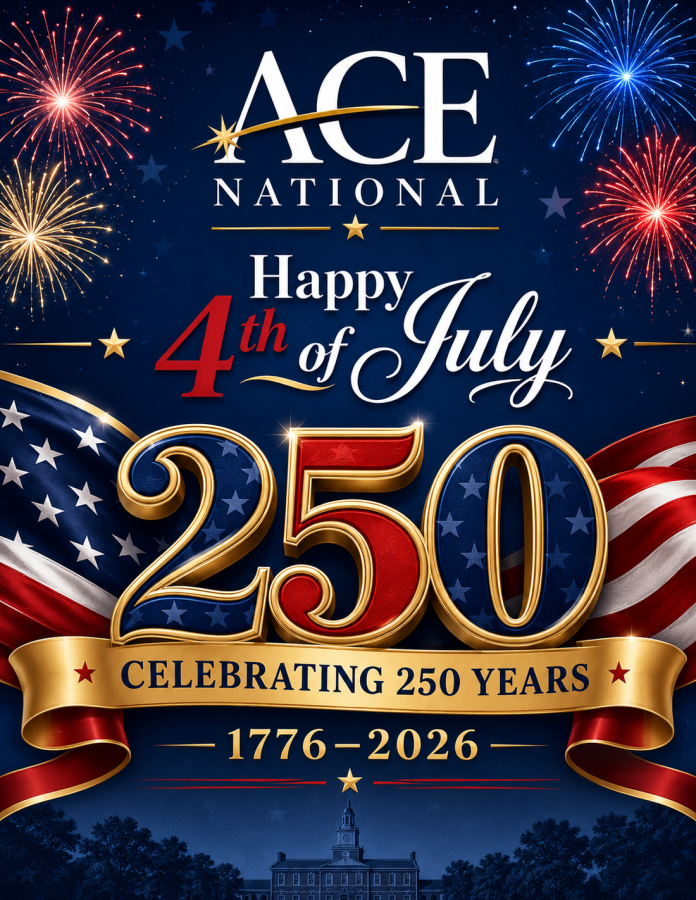
On this Fourth of July, and as the nation approaches its 250th anniversary, ACE National honors the enduring promise of independence, liberty, opportunity, and constitutional freedom. We thank every veteran, attorney, club owner, operator, trainer, provider, and advocate who continues to stand up for those principles.
America’s freedoms were not won by silence. It was loud, sometimes messy, and definitely, at times, unfair. This freedom we enjoy was won 250 years ago by people who refused to surrender them, and we are of their ilk.