







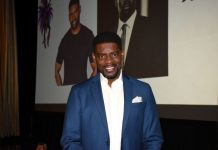









Look up “Nicoye Banks” on IMDB, and you’ll see a laundry list of TV and movie credits, extending all the way back to 2002. TV shows like “Law & Order,” “Atlanta” and “Sacrifice,” and movies like “Brooklyn’s Finest,” “Invincible” and, most recently, the multi-Oscar-winning “Sinners.”
But while his acting career is impressive — and ongoing — what is equally impressive is his experience and expertise in the hospitality industry. While pursuing his acting career, he made a name for himself at some of the very best restaurants and nightclubs in New York City and New Orleans. Banks is a native of New Orleans, where hospitality, rich cuisine and charm are in the air at every turn, and the heart of everything. It was in New Orleans, two decades ago, that Banks fell in love with the “art of service.”

 Banks later moved to New York City to more aggressively pursue his career in acting, but while there, he had the rare opportunity to work in one of the true meccas of hospitality. Starting in one of Bobby Flay’s restaurants — Mesa Grill — Banks quickly got recruited to Mesa City, and then onto a high-volume restaurant called Lola. Banks continued to develop his leadership and management skills, and went on to assist with the opening of Commune Restaurant. It was at Commune where he was exposed to a diverse clientele, a wide array of cuisine and unique wine list. He further refined his skills until he eventually worked alongside Michael Glick, the owner of two of New York City’s finest steakhouses, The Parlor and The Writing Room.
Similar to navigating the film business, Banks equates the service industry to acting or a ringmaster in a circus. As he states, “You are in control of the flow of things, you are the maestro of all parts of the (venue) to ultimately present the show to the guests which essentially is your audience. The central and most important part of hospitality is that every guest must feel cared for.”
We had the opportunity to have an in-depth conversation with Nicoye Banks, this year’s ED Expo Keynote Speaker, about his career in guest service, how the definition of “hospitality” has changed and evolved over the past two decades, and why having a “philosophy” guiding your club is arguably the most important element in the effectiveness of your club’s management and staff.
ED: As someone who has over two decades of experience in guest service and hospitality, how do you define what “hospitality” is in 2026, and how is it different today than maybe what it was 10 or 20 years ago?
BANKS: Well, that’s a great question. I started in the hospitality industry in 1992; I’m from New Orleans, born and raised, and this place breeds hospitality. I moved to New York in 1997 and was there for 15 years, so those are two great places to really learn and immerse yourself in culture and heritage, as well as hospitality. My level of experience in the restaurant business is from casual cafe dining to white tablecloth, semi-formal to formal dining. So, back then it was definitely about paying attention to details, taking care of every single detail there was, according to the level that the restaurant was rated.
 But as I grew in the industry, and as I grew as a man, I realized that hospitality is making certain that every guest feels cared for. The moment I grabbed hold to that philosophy, that elevated my experience as a server, as well as what I would like to consider the majority of the guests that I’ve served. In 2026, I feel like things are at a very, very rapid pace, and so a lot of details get overlooked. It’s a very rush-rush. Well, that’s not making anyone feel special. So, I think the industry is wide open for places and spaces where we can go back to the original feel: that is, make every guest feel cared for, welcome them in. They’re not customers, they’re guests. How do you treat guests in your home relative to someone who’s looked at as a dollar sign?
ED: So, you mentioned New Orleans and New York, and you’ve come full circle as you started in New Orleans and now you’re back in NOLA. But in your journey between the two, what experiences or specific positions that you had were the most important in shaping who you are today and the direction your career has taken you?
BANKS: As I matured as a man, I began to realize how important certain values and principles are, like sincerity; to give a guest a sincere answer, not the answer that you could easily Google. People appreciate that when you actually take your time with folks and explain things and guide their experience.
I was a server, I was a back waiter, I was a front waiter, I was a captain. I got as high as being an assistant general manager of a very successful restaurant in New York. When you have to govern so many people, you realize that one approach does not apply to everyone, you have to be malleable, you have to be adjustable and flexible in your approach and the way in which you handle things and way in which you handle people, but nevertheless, always keeping the central focus that everyone matters and therefore everyone’s experience matters. I care about that, and so I’m going to do whatever I can within my power to make certain that they have a great experience. When I was a manager, I made sure the employees felt supported, and of course, as a server, as a captain, every guest that I came in contact with, I gave them genuine and professional service.
I think the industry is wide open for places and spaces where we can go back to the original feel: that is, make every guest feel cared for, welcome them in. They’re not customers, they’re guests. How do you treat guests in your home relative to someone who’s looked at as a dollar sign? – Nicoye Banks
ED: Some people gravitate naturally towards leadership and management, and some people strive for it as their desired destination. Were you more naturally drawn to leadership and management, or did you actively develop a skill set to get to that point?
BANKS: Actually, I did not have aspirations of becoming a manager. It became a natural progression. The better I got as a server, the leaders at the time recognized something in me, and so I became one of the trainers of newly hired servers. They trained with me before they made it to the floor, but when they did, they had the confidence and skill to maneuver around the venue. The more I asked questions and the better I wanted to be at my job, my leaders recognized that.
For example, I took it upon myself to really get the knowledge beyond the wine and spirits companion; I went into classes and I went to wine tastings and I expanded my horizon. I went to the chefs at two in the afternoon when I was supposed to show up and work at four, just to see part of the process of how they were preparing certain dishes so that when I’m on the floor, I was one of the servers that could speak intellectually about a dish, as well as give them my personal preferences when asked. Once I got into those leadership roles, I just used what I experienced as a server to better communicate with my team, and I also had their respect, because I was one of them. It was no problem for me to roll up my sleeves and help them get out of the weeds. The restaurant is my main focus, not my pockets, not my section.
ED: In your experience of being a manager and a leader, what makes a good leader in your eyes?
BANKS: A good leader in my eyes exhibits qualities such as patience and foresight, knowledge and insight, compassion, and the ability to delegate. You don’t have to be an expert at everything, but as a leader, you need to be abreast on everything, because at the end of the day, your boss is going to come to you with various questions that you should have knowledge of. There’s nothing like empowering the people around you. I’m one person, but this operation has several different arms and legs to it, right? There’s nothing like empowering them to give a little more of themselves by highlighting their strong suits and putting them in positions to succeed. That creates a winning atmosphere when folks are happy to come to work, especially when you’re there, or especially if you’re the manager and they want to work for you. They want to work with you, because they know that you’re there with them.
 ED: The most important commodity in this industry right now is good general managers. How difficult is it to just drop a person into a managerial position, having never worked and in any other position in that club? What could you do to remedy that situation?
BANKS: There’s nothing like working your way up. There’s nothing like cross-training. What I would suggest to owners is to absolutely make cross-training something sexy, make it inviting, not necessarily a mandate, because the person who’s coming in, they want to say, ‘Hey, my resume speaks for itself, hire me as such.’ Well, the resume got you this interview, we’re interested in the person that you are, but at the same time now we want you to really see and know what WE are all about, not just hear about it from the owner. So, when you visit all these other departments, you will be getting the hands-on experience and see for yourself. And guess what — within these departments, you will probably see something that we could do better or become a little more efficient at, because you’ve seen it from the employee’s perspective and from the ground floor.
ED: It would be difficult, I’d think, to build a team or get them motivated to work for you if you have no idea who they are, what makes them tick, what their personalities are, what the flow of that specific establishment is, etc. I’m a big sports fan, so I understand the concept of getting a whole team moving in one direction. What are the key factors of building a team that wants to work together and that works together effectively, so that everybody wins on that team?
BANKS: It is crucial to have your team buy into the vision; the philosophy, the goal, the platform, the model, whatever it is. First of all, that philosophy must be clearly stated; the leadership must have a clear understanding of it. That’s how you get your team, your players, excited. You’re not a talking head, you’re not talking at them, you’re talking to them. So now they’re going to want to have conversations with you. The buy-in is important. It’s not selling, it’s emulating; it’s not propaganda, it’s our philosophy.
Back in the day, you and I know it was all about ‘do as I tell you.’ It was all about whoever was the flyest server or bartender; you’re the new person and you want to emulate that, because they were making big money. They got the big parties, and it seems like all their guests are having a great time when they’re sitting in their section. That’s what you want — but did you ask them they got there? More likely, you just tried to take a couple of their techniques and use it and think that it’s going to work for you. You have some places nowadays that are just flying by the seat of the pants, and service is not top quality. You have to make certain that everyone has a basic understanding of what we’re doing here and why certain things are done a certain way. The buy-in is crucial.
You’re not a talking head, you’re not talking at them, you’re talking to them. So now they’re going to want to have conversations with you. The buy-in is important. It’s not selling, it’s emulating; it’s not propaganda, it’s our philosophy. – Nicoye Banks
ED: One common refrain we’ve been hearing from clubs is their struggle to attract 20-somethings, partly because they don’t know what 20-somethings expect or want from customer service and hospitality. Is Generation Z different in terms of what they expect from customer service and hospitality, and what’s your experience been like dealing with that type of customer?
BANKS: I’m interested in how many of these owners and clubs are really trying to attract the 20-somethings, because their socialization is a lot different than the mid-to-late-30s, 40s and early 50s. Going to a strip club, you still have to have that boyish feeling. You’re sitting there looking at half-naked, beautiful women dancing in front of you, and it’s making you feel like you’re the only guy in the club. It’s making you want to engage in conversation with her. The music, the dance, the fashion, it’s captivating. I think any guy of any age can respond to the art of seduction and getting into a nice conversation.
ED: I believe that what we’re missing from a lot of the clubs in our industry right now, and what we desperately need help with, is team building, establishing a philosophy, and also re-embracing guest service and hospitality. There is also a mentality among some clubs and entertainers that they want to bleed every dollar out of every guest that comes into the club, with no concern as whether that guest will ever return.
BANKS: I say this all the time, there is nothing like residual income; you don’t have to (drain every dime) them the first time you meet them. Build a rapport, because return business is the key to building your following. It’s about providing the type of service where I don’t want them to get everything on the menu, I want them to get the things that will tickle their fancy in the beginning, and then I’m going to plant the seeds throughout their evening.
Have a hostess in your club show them where everything is, and introduce them to this, introduce them to that, introduce them to a bartender. ‘Hey, Christina will be taking care of you tonight.’ Handoffs are quite important, names and familiarity, and you’re right, Gen Z doesn’t even know how to really interact with each other beyond 10 minutes; they’ve got to get back to the phone, it’s chiming or vibrating, so they’re easily distracted. That means you have to be entertaining and engaging with the guests.
The power of engagement is strong. They may not necessarily buy a lot of dances that night, but they might sit there and buy a lot of drinks, and that’s when you plant seeds. For example, you might say, ‘Hey, on Wednesday we have half-naked Twister; you get to play Twister with two or three of these beautiful women.’ ‘Oh, damn, that sounds interesting, that’s different.’ ‘Yeah, only on Wednesdays.’ And once you get them in, then hey, you start to plant seeds for other products, other shows, other services, other things that the club has to offer, or that the club will be offering. There’s nothing like having people looking forward to something.
You don’t have to kill them the first time you meet them. Build a rapport, because return business is the key to building your following. It’s about providing the type of service where I don’t want them to get everything on the menu, I want them to get the things that will tickle their fancy in the beginning, and then I’m going to plant the seeds throughout their evening. – Nicoye Banks
ED: Speaking of special events and “something to look forward to,” how are clubs missing the boat when it comes to themed nights or events?
BANKS: How many clubs out there are doing theme nights? I’m not talking about your typical “Halloween” party, I’m talking about an example like celebrating Prince’s birthday; it’s Purple Rain Night, it’s Prince Night, it’s Michael Jackson night — completely different themed nights than other clubs have done for years.
Not only does this give your club something to promote and lure in more guests, especially new guests, it may also give your staff something to look forward to. They may look forward to dressing up, they may look forward to a theme party, they may have some good ideas to cultivate the idea. That’s that’s part of the staff buy-in, the team-building, and the overall club philosophy.
ED: Finally, I want to say, congratulations. I’m a huge horror movie fan, so for me to see “Sinners” do so well at the Oscars (the movie won four Oscars and was nominated for a record-breaking 16—Ed.) made people in the horror community very, very happy. What was it like to work on that amazing movie, and what was it like to see “Sinners” celebrated so grandly at the Oscars this year?
BANKS: Let me tell you something: That experience was like none other, and I have quite a few movie credits. “Sinners” was completely different from everything else. What do I mean? Guess what — no one got a script. Repeat that, no one, except the department heads, and of course the main actors. But supporting leads, supporting actors, day players, no one got a script, so you didn’t know where the story was prior to your days of working, and you didn’t know where it was going, because there was no script available. It was long hours, it was very unpredictable, and as you saw in the movie, the majority of it was shot at night, so my call time was about nine, and I go sit in my trailer for like four hours, because they don’t need me until 1:30 or 2 am, and we went until sunrise. It was a lot of work, but (Director Ryan Coogler) had such a tight team. That was a great movie to be a part of, and to witness how it all came together.
For more information on Nicoye Banks, visit www.mavericktheory.com/nicoye-banks.