













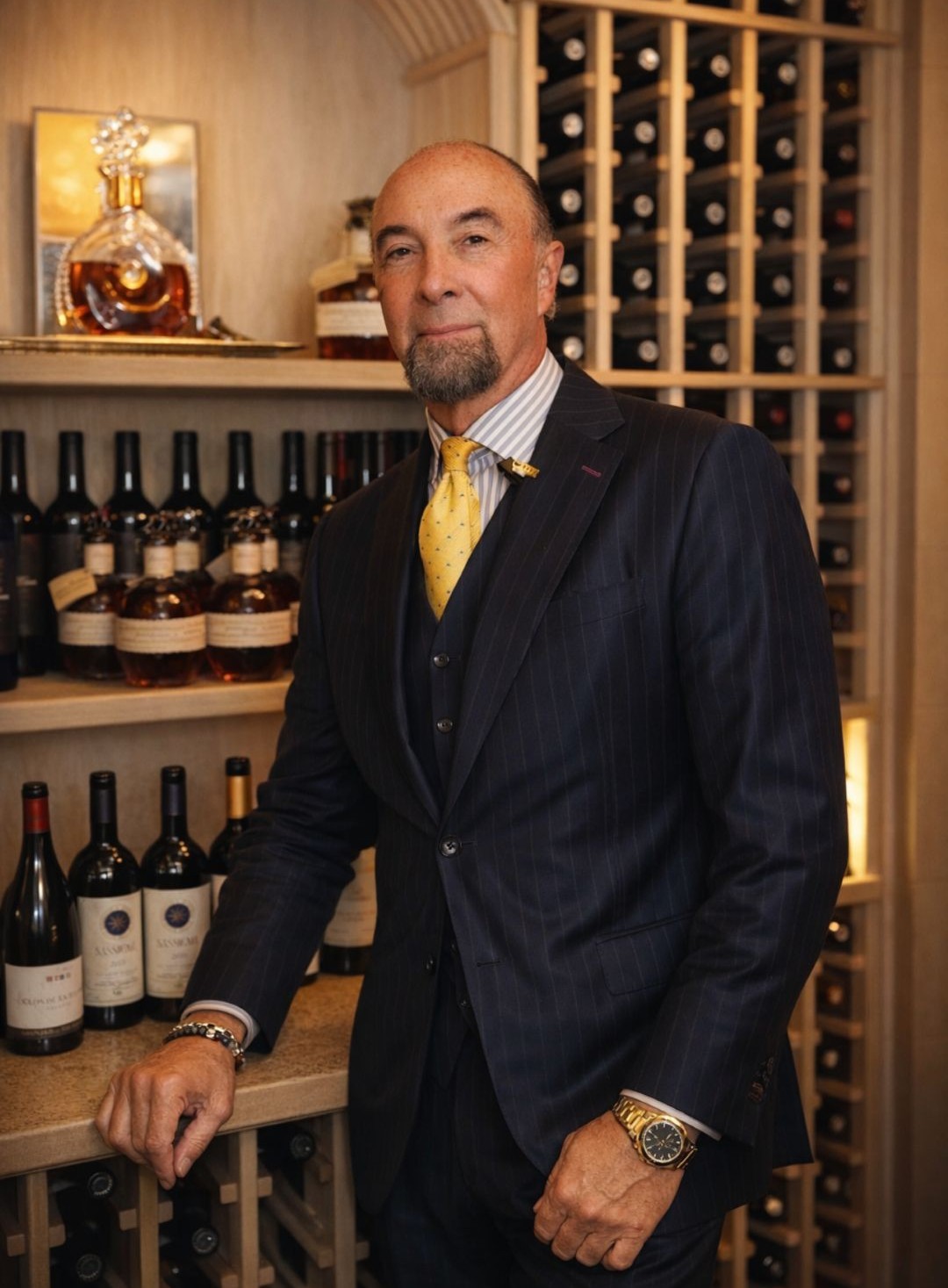

At The Men’s Club of Dallas, Paolo Stoltz turns nightlife into a controlled, high-end performance, where timing, discretion and design define every guest interaction.
(Note: This article was published in the May 2026 issue of ED Magazine.)
At The Men’s Club of Dallas, a venue where fine dining converges with high-end hospitality, host Paolo Stoltz doesn’t manage the VIP program, he orchestrates it. Overseeing the club’s VIP experience with a level of precision shaped by decades in the industry, his role extends beyond hospitality or sales. It is an exercise in control, timing and narrative designing an environment that feels effortless to the guest while operating with exacting discipline behind the scenes.

“David Fairchild has held me captive since 1994. What a great ride it’s been—best in the world,” Stoltz says, crediting both Fairchild and director Lloyd Ace for shaping his approach. He describes their influence as a “blueprint” for a system that defines how the venue operates at its highest level. That system begins long before doors open.
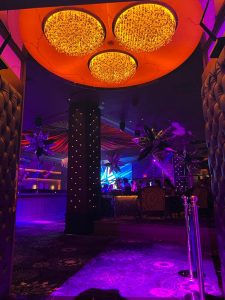
Stoltz arrives in the late afternoon, when the club is still in preparation mode. The Men’s Club kitchen operates with the structure of an upscale restaurant. On the floor, VIP reservations are reviewed and mapped out in advance. Every table, preference and anticipated need is accounted for.
Engineering the night
Early service is intentionally restrained. Guests arriving at the start of the late afternoon encounter an atmosphere closer to fine dining than nightlife. Orders center on steaks, seafood and premium drinks. Service is attentive but measured.
“We’re polished without hovering,” Stoltz explains.
Entertainment mirrors that tone. Dancers circulate lightly, engage in conversation and perform selectively. The pace is social, not theatrical. Even outdoor spaces, such as the cigar patio, maintain continuity in atmosphere, an extension of the same controlled flow.
As the evening progresses, the energy shifts. Dining gives way to drinking. Bottle service increases. Guests settle in rather than pass through. This transition marks the activation of the club’s VIP engine, where demand for private sections and premium experiences rises. Critically, the escalation is managed not allowing anything to spiral.
“The energy builds, but it never feels chaotic if it’s run properly,” Stoltz says.
The guest shouldn’t see the work. They should just feel like everything happened the way they wanted.
— Paolo Stoltz
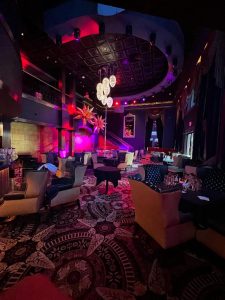
Control remains the central principle. Movement across the floor is intentional. Guests seeking quieter environments are accommodated upstairs. Staff rotation ensures balance. The goal is sustained momentum without disorder.
By closing, the operation contracts with the same discipline it expanded preparing for the next day.
Underlying every phase is a consistent philosophy: prioritize the guest, maintain control of the environment and deliver elegance without intrusion. According to Stoltz, this is what distinguishes a high-end venue from its competitors. Not aesthetics, but structure.
“It’s cleaner, more professional and more consistent,” he says. “That translates into better results across the board.”
As a VIP host, Stoltz’s responsibility is comprehensive. He manages the guest experience from initial contact through departure, often beginning well before arrival. Detailed records, specifically their preferences, habits, prior visit count etc., inform each interaction. By the time a guest enters, the experience is already in motion.
“I’m usually their first point of contact,” he says. “From there, it’s about coordination.”
Managing energy at scale
That coordination spans the entire operation: servers, bartenders, security and entertainers. Timing is critical. Service must feel immediate without appearing rushed. Adjustments happen in real time, often without the guest’s awareness.
The core skill, Stoltz emphasizes, is perception.
“Some guests want energy. Others want privacy. You have to recognize that immediately and adjust.”
Upselling exists, but it’s integrated into the experience rather than imposed on it. Suggestions are framed as enhancements, not transactions. When executed correctly, the process becomes invisible.
“The guest shouldn’t see the work,” Stoltz explains. “They should just feel like everything happened the way they wanted.”
This level of execution depends on three core competencies: instinct, precision and composure.
Instinct allows a host to read guests quickly and accurately. Precision ensures that details like names, preferences and patterns are remembered and applied. Composure keeps the operation stable, even under pressure.
My job is to manage the story. From the [guest’s] first interaction to the exit.
— Paolo Stoltz
Stoltz also mentions that restraint is equally important. Trust is non-negotiable. Discretion means never discussing clients, spending or personal details. (It’s the strip club equivalent to HIPPA, basically.) Emotional control is equally critical; frustration or conflict must never surface on the floor. Sales, if mishandled, can undermine the entire experience.
“Push too hard, and it feels transactional,” Stoltz notes. “That breaks the illusion.”
Neglect carries similar risk. VIP guests at The Men’s Club expect attention proportional to their investment. Failure to deliver creates immediate dissatisfaction. Boundary management is also essential, over-familiarity can lead to discomfort or liability according to Stoltz.
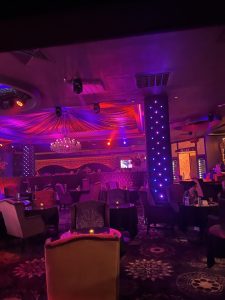
When working with high-value clients, preparation becomes more strategic. Stoltz focuses first on understanding the guest: seating preferences, drink choices, behavioral patterns. From there, logistics are aligned—table placement, staffing, security coordination. Beyond logistics lies subtle planning.
“I plan for spending without making it obvious,” he says.
Timing becomes a lever. Guiding the pace of the evening without forcing it. High-value guests are not simply purchasing products; they are investing in an experience defined by control, recognition and continuity.
“My job is to manage the story,” Stoltz explains. “From the [guest’s] first interaction to the exit.”
For more information please visit mensclub.com.